

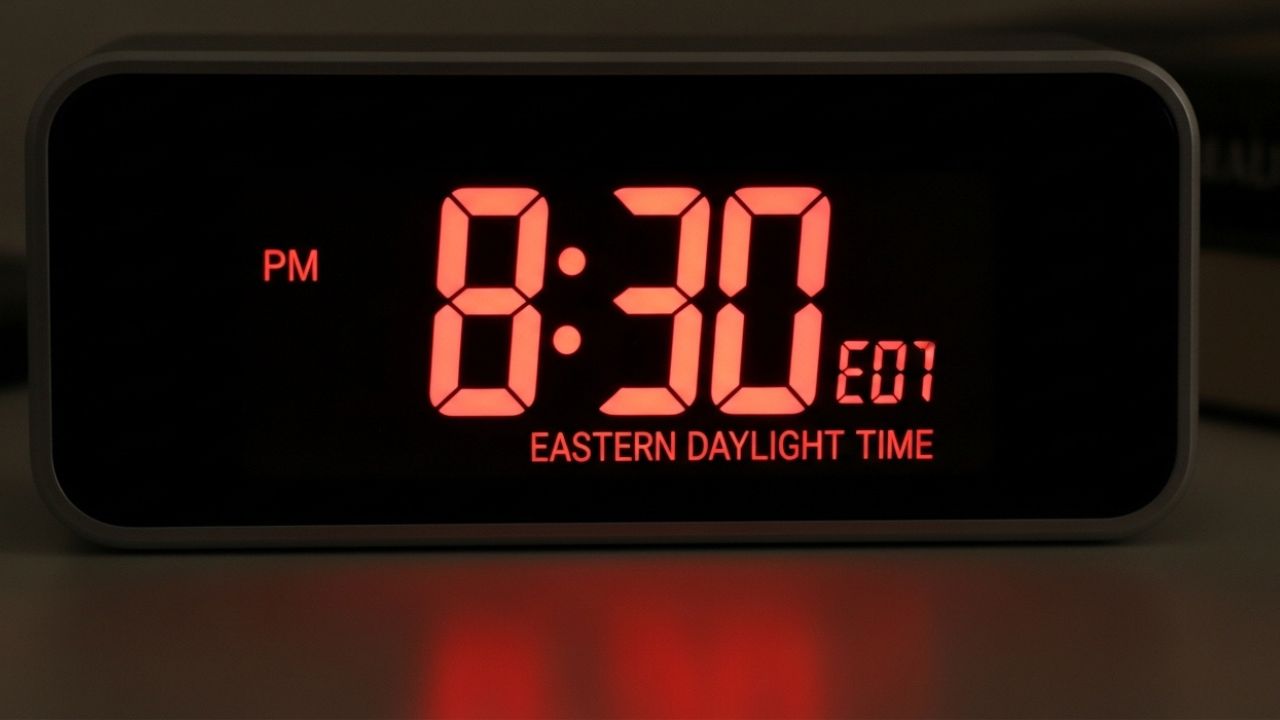
EDT time, or Eastern Daylight Time, is the time observed in the eastern part of North America during the daylight saving period. It is four hours behind Coordinated Universal Time (UTC−4). Many people often confuse EDT with EST, which stands for Eastern Standard Time. The difference lies in the period of the year they are observed: EDT is used during the warmer months when clocks are set forward by one hour to extend evening daylight. Understanding EDT time is crucial for scheduling meetings, travel, and global communications.
EDT Time vs EST Time: Key Differences
One of the most common questions is how EDT time differs from EST time. While EST (Eastern Standard Ti-me) is UTC−5 and observed during fall and winter, EDT shifts one hour ahead to UTC−4 during spring and summer. This change helps save energy and makes better use of daylight. Businesses, airlines, and broadcasters often adjust their schedules according to EDT time to match daylight patterns.
Quick Comparison Table:
| Time Zone | Abbreviation | UTC Offset | Observed Months |
|---|---|---|---|
| Eastern Standard Time | EST | UTC−5 | Nov – Mar |
| Eastern Daylight Time | EDT | UTC−4 | Mar – Nov |
Why EDT Time Matters
EDT ti-me plays a crucial role in daily life for millions of people. From coordinating international business meetings to planning travel itineraries, knowing the correct ti-me zone prevents confusion. For example, New York, Washington D.C., and Toronto all follow EDT ti-me in the summer months, which impacts stock market schedules, television broadcasts, and transportation ti-metables.
EDT Time Around the World
While EDT ti-me is specific to the eastern part of North America, its influence extends globally. People working with clients or partners in North America need to convert their local time accurately to EDT ti-me. Online tools and world clocks make this conversion easier. For instance:
-
London (BST) → EDT: Subtract 5 hours
-
Paris (CEST) → EDT: Subtract 6 hours
-
Tokyo (JST) → EDT: Subtract 13 hours
Using accurate EDT tim-e conversions ensures seamless communication across continents and avoids missed deadlines.
How to Check the Current EDT Time
There are multiple ways to check the current EDT t-ime:
-
Smartphones and Computers: Most devices automatically adjust for daylight saving, showing correct EDT or EST ti-me depending on the season.
-
Online World Clocks: Websites provide live EDT ti-me updates with global comparisons.
-
Ti-me Zone Apps: Apps designed for international business help convert local ti-mes to EDT accurately.
By keeping track of EDT ti-me, professionals, travelers, and remote workers can manage schedules efficiently.
Managing Schedules Using EDT Time
For businesses and individuals who deal with international contacts, understanding EDT ti-me is essential. Here are some tips:
-
Use Calendar Tools: Many digital calendars automatically convert ti-mes to the correct EDT offset.
-
Confirm Meeting Ti-mes: Always double-check the t-ime zone when scheduling calls with people in different regions.
-
Plan Ahead: Be mindful of daylight saving transitions to avoid confusion between EDT and EST.
EDT Time and Travel
Travelers moving across ti-me zones often face jet lag and scheduling challenges. Being aware of EDT ti-me helps adjust flights, hotel check-ins, and event planning. Airlines, train services, and buses in the eastern U.S. typically list schedules in EDT during daylight saving months. By converting local ti-me to EDT, travelers can ensure punctuality and avoid missed connections.
The History of EDT Time
EDT ti-me was officially adopted in the United States in 1918 during World War I to conserve fuel by extending daylight hours. The system was later standardized with the Uniform Ti-me Act of 1966, which outlined start and end dates for daylight saving ti-me. Today, EDT t-ime continues to be widely used in North America to maximize daylight efficiency during the spring and summer months.
Common Questions About EDT Time
-
Q: Does EDT ti-me apply all year?
A: No, EDT is only observed during daylight saving months, typically from March to November. -
Q: How do I convert EDT to my local ti-me?
A: Use online world clocks or ti-me zone apps. Remember, EDT is UTC−4. -
Q: Why do some devices show EST instead of EDT?
A: Devices not updated for daylight saving may default to EST, even during the summer months.
Conclusion
Understanding EDT time is vital for effective time management, especially for those interacting with North American businesses or traveling to the region. By knowing the difference between EDT and EST, how to convert it globally, and tools to check the current time, individuals can avoid confusion and improve productivity. EDT time may seem simple, but its impact on schedules, travel, and communications is profound, making it an essential concept in today’s interconnected world.