

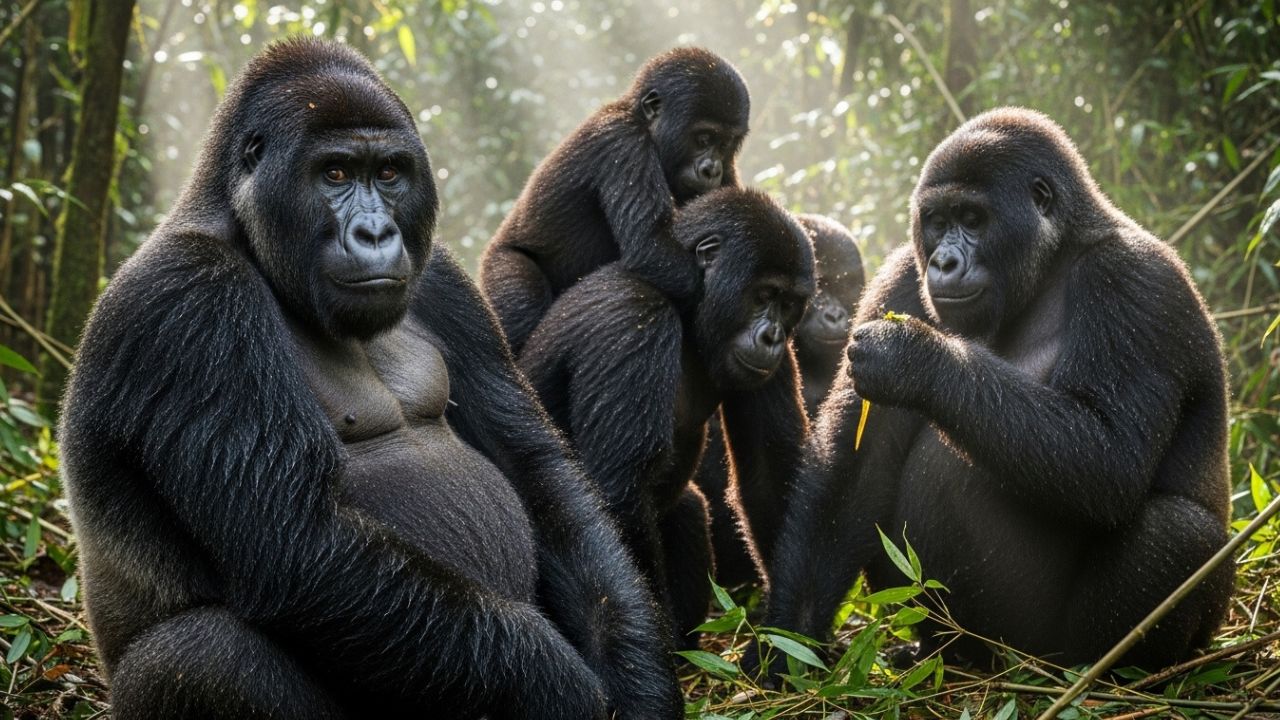
Mountain gorillas (Gorilla beringei beringei) are one of the most remarkable and endangered primates on our planet. Found in the lush forests of the Virunga Mountains and the Bwindi Impenetrable National Park in Africa, these gentle giants have captivated the hearts of many due to their intelligence, complex social structures, and striking beauty. Despite their impressive resilience, mountain gorillas face numerous threats that put their survival at risk. This article delves into the world of mountain gorillas, their habitat, behavior, conservation efforts, and ongoing challenges.
Understanding Mountain Gorillas
Physical Characteristics
Mountain gorillas are known for their robust build, thick fur, and distinct facial features. The males are considerably larger than females, with adult males weighing between 300 to 485 pounds and standing about 5 to 6 feet tall when fully grown. Their thick, grayish-black fur helps them thrive in the cool, misty environments of their high-altitude habitats.
Notable Features
- Build: Muscular and powerful with a broad chest.
- Fur: Thick and long to protect against cool weather.
- Face: Broad with a flat nose and expressive eyes.
Habitat and Geographic Distribution
Mountain gorillas inhabit the mountainous forests of East Africa, specifically in two key locations:
- Virunga Mountains: This range spans across four countries—Rwanda, Uganda, the Democratic Republic of the Congo (DRC), and covers several national parks, including Volcanoes National Park.
- Bwindi Impenetrable National Park: Located in southwestern Uganda, this UNESCO World Heritage site is another critical habitat for mountain gorillas, offering dense vegetation for foraging and nesting.
Social Structure and Behavior
Family Groups
Mountain gorillas live in social groups known as troops, typically consisting of one dominant male known as a silverback, multiple females, and their offspring. The silverback plays a crucial role in protecting the group and maintaining social harmony.
Group Dynamics
- Leader: The dominant silverback leads the troop, making decisions on movement and feeding.
- Females: Female gorillas usually stay with their birth group but may migrate to another troop.
- Offspring: Young gorillas learn vital survival skills from their mothers and watch the silverback for social cues.
Communication
Mountain gorillas communicate through a variety of vocalizations, body language, and facial expressions. They use grunts, hoots, and roars to express emotions or alert the troop to potential threats. This sophisticated communication system is essential for maintaining social cohesion and alerting the group to dangers.
Feeding Habits
Diet
Mountain gorillas are primarily herbivorous, feeding on a diverse range of vegetation such as leaves, stems, flowers, and fruits. Their diet varies seasonally, depending on the availability of food in their mountainous habitats.
Foraging Behavior
- Daily Routine: Mountain gorillas spend a significant portion of their day foraging for food, with adults consuming up to 40 pounds of vegetation daily.
- Nesting: They build nests from leaves and branches to rest and sleep, usually on the ground or low branches.
Conservation Status
Threats to Survival
Mountain gorillas were once on the brink of extinction, with their populations declining due to several factors:
- Habitat Loss: Deforestation due to agriculture, logging, and human settlement has significantly reduced their natural habitat.
- Poaching: Despite legal protections, poaching remains a threat, with gorillas targeted for bushmeat or illegal wildlife trade.
- Diseases: As humans encroach on their habitats, mountain gorillas are at risk of contracting diseases like respiratory infections, which can be deadly for them.
Conservation Efforts
Over the years, concerted conservation efforts have led to a gradual increase in the mountain gorilla population. Key initiatives include:
- Protected Areas: Establishing national parks and protected areas to conserve gorilla habitats and limit human activities that threaten their survival.
- Anti-Poaching Strategies: Employing park rangers to monitor and protect gorilla populations from poaching and illegal activities.
- Community Engagement: Involving local communities in conservation efforts by promoting eco-tourism, which generates revenue and incentivizes the protection of gorillas.
Population Recovery
According to recent surveys, the population of mountain gorillas has shown signs of recovery, with estimates suggesting approximately 1,063 individuals remain in the wild. This success is largely attributed to effective conservation strategies and the involvement of local communities in protecting these majestic creatures.
Ecotourism and Its Impact
Benefits of Ecotourism
Ecotourism has become a significant source of income for surrounding communities and plays a critical role in mountain gorilla conservation. Visitors can partake in gorilla trekking, observing these fascinating animals in their natural habitat while supporting conservation efforts financially.
Economic Incentives
- Employment Opportunities: Ecotourism creates jobs for local people in various sectors, including guiding, lodging, and transportation.
- Community Investment: Revenue from tourism helps fund local schools, healthcare, and infrastructure improvements.
Ethical Considerations
While ecotourism benefits conservation and local economies, it must be conducted responsibly to minimize disturbances to mountain gorillas. Guidelines for responsible tourism include limiting group sizes, implementing strict viewing distances, and ensuring that visitors do not approach or feed the animals.
Conclusion
Mountain gorillas are a symbol of conservation success, demonstrating the possibility of recovery through dedicated efforts. Their unique behavior, social structure, and ecological significance make them a vital component of their forest ecosystems. Ongoing conservation strategies and community involvement will be crucial to ensure their continued survival as we work to protect the remarkable biodiversity of our planet.
Frequently Asked Questions
1. What are mountain gorillas?
Mountain gorillas (Gorilla beringei beringei) are a subspecies of Eastern gorillas found in the mountainous regions of Central Africa, specifically in the Virunga Mountains and Bwindi Impenetrable National Park.
2. How many mountain gorillas are left in the wild?
As of recent estimates, there are approximately 1,063 mountain gorillas remaining in the wild, showing signs of recovery due to conservation efforts.
3. What do mountain gorillas eat?
Moun-tain gorillas are primarily herbivorous, feeding on leaves, stems, fruits, and flowers. They consume a wide variety of vegetation to meet their nutritional needs.
4. What threats do mountain gorillas face?
Moun-tain gorillas face multiple threats, including habitat loss from agriculture and logging, poaching, disease transmission from humans, and climate change.
5. How do mountain gorillas communicate?
Mountain gori-llas communicate through various sounds, such as grunts and roars, as well as body language and facial expressions to convey emotions and alert their group to dangers.
6. What is ecotourism, and how does it benefit mou-ntain gorillas?
Ecotourism involves responsible travel to natural areas, promoting conservation and supporting local communities. For mou-ntain gorillas, it provides a financial incentive to protect their habitats while allowing visitors to observe them in the wild.
7. How can I support mountain gorilla conservation?
You can support mountain gorilla conservation by visiting national parks responsibly, donating to conservation organizations, and advocating for sustainable practices that protect their habitats.
8. What is the social structure of mountain gorilla groups?
Mountain gorilla groups, known as troops, are typically led by a dominant male called a silverback, along with several females and their offspring. The silverback plays a crucial role in protecting the group.
9. Are mountain gorillas dangerous to humans?
Mount-ain gorillas are generally gentle and shy, posing little threat to humans. However, like any wild animal, they can become aggressive if they feel threatened or cornered.
10. What conservation efforts are in place for moun-tain gorillas?
Conservation efforts include protecting habitats through national parks, anti-poaching initiatives, community engagement programs, and international collaborations aimed at preserving the species.