

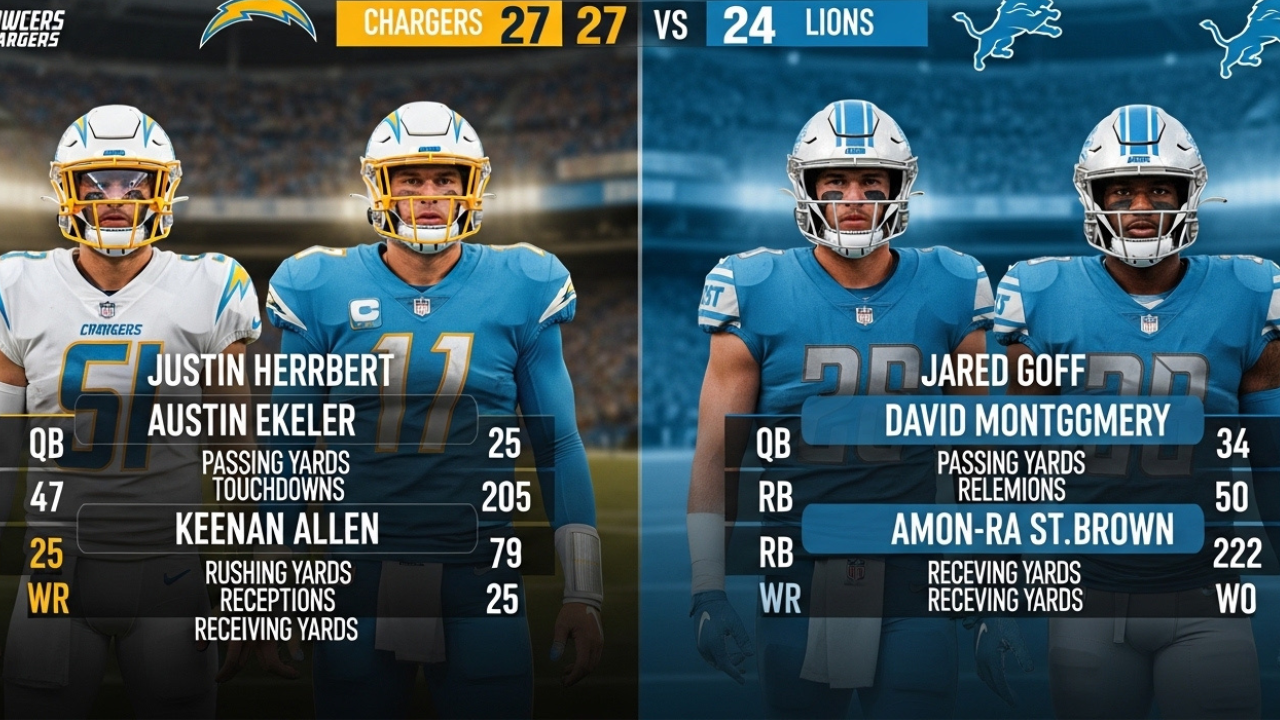
The Los Angeles Chargers vs Detroit Lions match player stats reveal a fascinating snapshot of player performance in a compelling NFL preseason showdown. This article dissects how individual athletes shaped the game, offering detailed statistical context, key performers, and strategic takeaways. With both teams showcasing depth and potential, the player stats from this matchup provide valuable insight into offensive and defensive capabilities on display.
Game Overview: Los Angeles Chargers vs Detroit Lions Match Player Stats
When the Los Angeles Chargers vs Detroit Lions match player stats are reviewed, one particular contest stands out—the 2025 Hall of Fame Game played on July 31, 2025. Although it was a preseason encounter, the game provided a platform to evaluate emerging and role players on both sides of the ball.
The final score of this matchup was a commanding 34–7 victory for the Chargers, highlighting strong productivity from their offense and opportunistic playmaking on defense.
Offensive Leaders: Chargers & Lions
Chargers Offensive Player Stats
In the Los Angeles Chargers vs Detroit Lions match player stats, Chargers quarterback Trey Lance emerged as a standout offensive leader. Lance completed 13 of 20 passes for 120 yards and two touchdowns, pacing the Chargers’ attack and showcasing accuracy and poise despite it being a preseason outing.
Running back Kimani Vidal made an impact on the ground, producing 37 rushing yards on nine carries, including two rushing touchdowns. This performance highlighted his effectiveness in short-yardage and red‑zone situations.
Receiver KeAndre Lambert‑Smith also contributed with two receptions for 43 yards and a receiving touchdown, showcasing his potential as a dynamic option in the passing game.
Overall, Chargers offensive stats showed a balanced attack: reliable quarterback play backed by diverse rushing contributions and timely passing plays.
Lions Offensive Player Stats
The Los Angeles Chargers vs Detroit Li-ons match player stats reveal that Detroit’s offense had limited success in this contest, with few players consistently breaking through. Running back Craig Reynolds led the Lions with 38 rushing yards on 10 carries and one touchdown, serving as the focal point in Detroit’s ground game.
Isaac TeSlaa led the receiving corps with two catches for 46 yards, indicating flashes of playmaking potential in the passing game.
However, overall passing production for the Lions was modest, with Kyle Allen completing 9 of 14 passes for 91 yards and two interceptions, while Hendon Hooker added limited passing yardage and an interception.
This combination of struggles in the passing game and limited explosive plays contributed to the Lions’ lower overall offensive output.
Comparative Team Statistics
When comparing overall team performance in the Los Angeles Cha-rgers vs Detroit Lions match player stats, clear advantages emerge. The Chargers finished the game with 261 total yards to the Lions’ 197, indicating better offensive rhythm and execution.
The Chargers also controlled the time of possession, maintaining the ball for over 32 minutes compared to Detroit’s nearly 28 minutes. This balance helped keep Detroit’s offense off the field and allowed the Chargers to sustain drives.
Other team stats reflected this dominance:
-
First downs: Chargers 16, Lions 12
-
Passing yards: Chargers 140, Lions 104
-
Rushing yards: Chargers 121, Lions 93
-
Turnovers: Chargers 0, Lions 2 lost fumbles/interceptions
-
Penalties: Chargers 3 for 25 yards, Lions 8 for 68 yards
These metrics demonstrate not only offensive effectiveness but disciplined play from the Chargers.
Defensive Highlights from the Match
Defense plays a critical role in NFL outcomes, and the Los Angeles Charge-rs vs Detroit Lions match player stats reflect the Chargers’ ability to make impactful plays on that side of the ball. Multiple forced turnovers, including interceptions, helped shift momentum and created advantageous field positions throughout the game.
Chargers defensive backs and linebackers contributed to the team’s turnover tally, showcasing a well‑rounded defensive performance that stifled Detroit’s offensive progress.
Meanwhile, the Lions’ defense, despite allowing significant yardage, did prevent further scoring, reflecting some resilience in limiting Chargers offensive efficiency in the later stages of the matchup.
Noteworthy Individual Performances
Trey Lance (Chargers): 13/20, 120 yards, 2 TD — A reliable presence under center, Lance distributed the ball efficiently and made decisive plays in key moments.
Kimani Vidal (Chargers): 9 carries, 37 yards, 2 TD — Vidal maximized limited opportunities with two key rushing scores.
Craig Reynolds (Lions): 10 carries, 38 yards, 1 TD — Reynolds was the Lions’ offensive catalyst, scoring Detroit’s lone touchdown.
KeAndre Lambert‑Smith (Chargers): 2 receptions, 43 yards, 1 TD — A dynamic playmaker whose touchdown energized the Chargers’ offensive output.
Isaac TeSlaa (Lions): 2 receptions, 46 yards — One of Detroit’s more effective pass catchers on the night.
Strategic Takeaways from Player Stats
The Los Angeles Chargers vs Detroit Lio-ns match player stats highlight several key insights:
-
Balanced Offensive Contributions: Chargers showed multiple avenues of attack, blending efficient quarterback play with effective rushing and receiving support.
-
Turnover Impact: Detroit’s turnovers, both via interceptions and fumbles, hindered offensive drives and shifted momentum toward the Chargers.
-
Defensive Opportunism: Chargers defenders consistently created pressure and opportunities, translating into key stops and turnovers.
Overall, these player stats underscore the importance of depth, situational execution, and opportunistic playmaking in shaping NFL contests.
Conclusion:
Reviewing the Los Angeles Chargers vs Detroit Lions match player stats provides a rich understanding of both team and individual contributions. While the Chargers delivered a clear victory with balanced offensive outputs and strong defensive plays, the Lions showcased flashes of promise amid struggles to sustain offensive drives.
These player stats serve as an informative benchmark as both franchises progress through future matchups, offering key insights for fans, analysts, and fantasy football enthusiasts alike.